20% off on product page · save $1.50
Baby Proofing Doors and Cabinets: A Practical Guide
Walk through your home at your child’s eye level. Open low cabinets and drawers, and look for medicines, cleaning products, sharp tools, batteries, magnets, and small objects that could be swallowed. Include spaces you use only occasionally; a guest bathroom or laundry cabinet still matters if your child can reach it.
Secure hazardous contents immediately, and move especially dangerous items up and out of reach. A child-resistant latch adds a barrier; it does not replace safe storage. Make a habit of putting items away as soon as you finish using them, rather than leaving them on a counter or beside an open cabinet.
Next, consider doors leading to stairs, garages, bathrooms, laundry areas, and outdoors. The right measure depends on the doorway and the hazard beyond it. Whatever you choose, adults must still be able to leave quickly in an emergency. For broader home-safety guidance, visit the U.S. Consumer Product Safety Commission’s Kids and Babies resources.
Cabinet catches, drawer latches, knob covers, lever locks, and gates address different openings. Note how yours opens, where hardware would attach, and whether trim or handles interfere. Follow the device manufacturer’s age, placement, and installation instructions.
For stairs, use a gate designed for its specific location; do not assume a gate suited to the bottom is appropriate at the top. For room doors, consider both the hazard beyond the door and whether adults can get through promptly. Keep emergency exits usable.
Featured in this guide
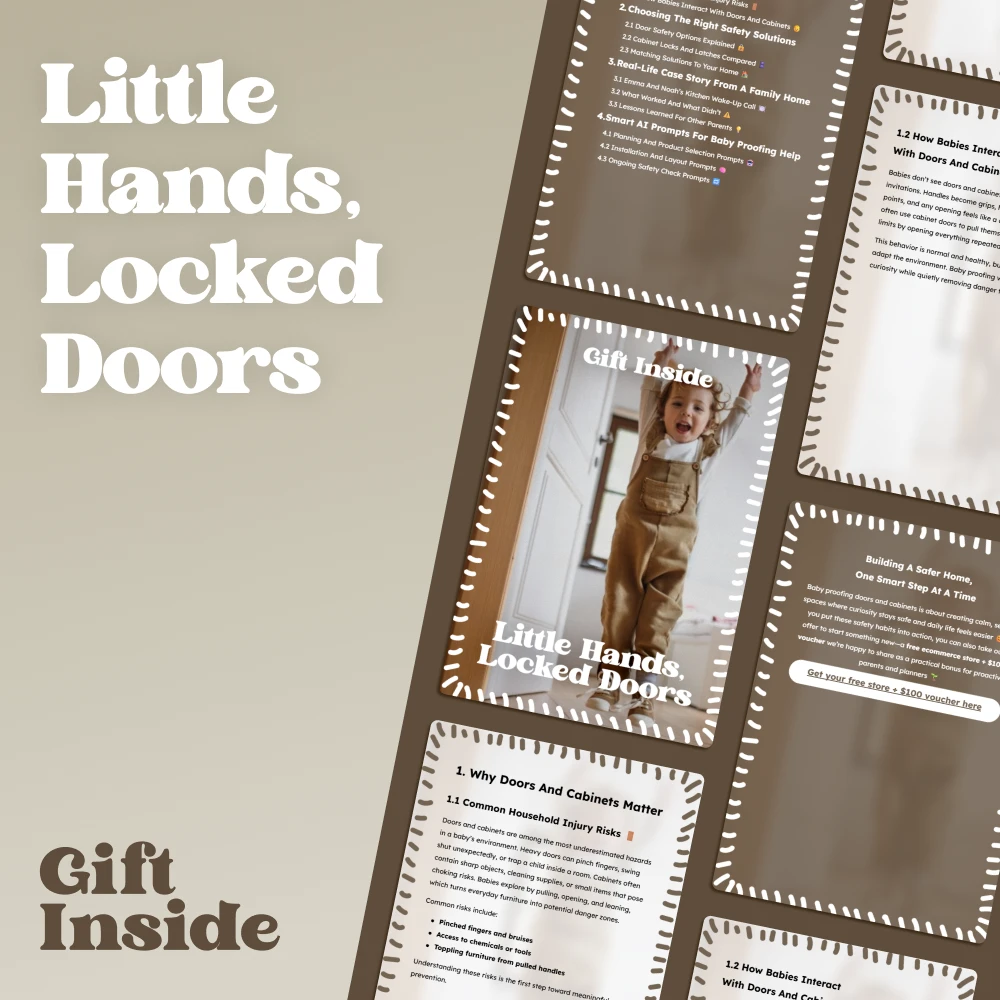
Little Hands, Locked Doors – A Practical Guide to Baby Proofing Doors and Cabinets for Safer Homes
Our Little Hands, Locked Doors baby-proofing guide can help you organize a room-by-room door-and-cabinet plan. Start with the highest-risk spaces, then revisit your choices as your child’s abilities change. Use the instructions for each safety device when installing hardware.
Our Little Hands, Locked Doors baby-proofing guide is a practical companion for organizing your door-and-cabinet plan. Use it alongside your own walk-through and the instructions for any safety hardware you select. Start with the highest-risk spaces, then return to the rest of your home as you have time.
If keeping household information easy to find is part of your plan, our Everyday Search Hacks guide offers a separate resource for everyday research. For installation and use, though, rely on the directions supplied with your particular safety device.
The A Parent’s Guide to the Crib-to-Bed Transition | Toddler Sleep Ebook for a Smooth toddler transition from crib to bed | Gentle Parenting Digital Guide provides a defined sleep surface during family stops and overnight travel; it pairs with the featured product during the same trip.
Before choosing, compare the product details with your daily routine, available space, care needs, and preferred setup. The strongest option is usually the one that fits the intended use clearly and remains simple to clean, store, and check before repeat use.
It is also worth checking measurements, material notes, included parts, and compatibility details so the item matches the way it will be used after delivery.
Before choosing, compare the product details with your daily routine, available space, care needs, and preferred setup. The strongest option is usually the one that fits the intended use clearly and remains simple to clean, store, and check before repeat use.
If you mean hands that become stuck, stiff, or difficult to move, that is a health concern rather than a door-lock issue. Seek medical advice, especially if symptoms are new, painful, or persistent.
Clasping or interlacing your fingers is commonly called clasping your hands. If you mean your fingers involuntarily lock in position, a healthcare professional can help identify the cause.




Leave a comment